
Tips & Tricks For a Stress-free Holiday Baking Season
It’s that time of year again! My favorite part of the holidays is baking treats for friends and family — both as gifts and for special meals. But we all know how hard it is to juggle daily life and still do what we love: bake!
Of course, there are the obvious tips:
Be organized (I’m an Excel nerd myself!)
Plan ahead
Test new recipes early — or stick to tried and true favorites
Take inventory of your supplies — most baking ingredients go on sale this time of year
But here are a few holiday-specific baking tips — some you probably know, and I’m betting at least one will be new to you!
1. The Freezer Is Your Friend
Cake layers, baked cookies, cupcakes, and pie dough can all be baked, cooled, and then frozen for a few months. Make sure baked goods are completely cool before wrapping airtight. If storing cookies in a container, add another layer of plastic wrap (or a jumbo Ziploc bag) to block odors and prevent that dreaded “freezer taste.”
2. Pre-Portion for Drop Cookies
Scoop your cookie dough, freeze the portions solid, and then transfer them to a freezer bag. When it’s time to bake, just pop them on a tray and add a few minutes to the baking time.
(Bonus: frozen cookie dough balls make an excellent snack… you know you’ve done it!)
For pies, make your dough now — and use the full amount of water (the freezer dries things out). Thaw overnight in the fridge when ready to roll.
3. Freezing Decorated Sugar Cookies
You can decorate, dry (24–48 hours), heat seal individually, and freeze your cookies!
To thaw, place the entire sealed container on the counter — do not open — and let it come to room temp (6 hours or overnight). This prevents condensation from ruining your beautiful icing. If you’ll enjoy them within a few weeks, skip the freezer and just store sealed cookies in the fridge.
4. Keep Spiced Cookies Separate
Gingerbread and spiced cookies smell amazing — but they’ll share that flavor with everything nearby. Package them separately (bonus points for cute little boxes!) to keep your cookie assortment balanced.
5. Yes, You Can Freeze Cake Batter!
If you have extra butter or oil-based cake batter, freeze it for later. Thaw overnight in the fridge and bake as usual. This doesn’t work for chiffon or sponge cakes (which rely on egg whites for rise), but for standard batters, the baking powder will stay mostly inactive until the oven heat kicks in.
6. Let Go of Perfection
At the end of the day, holiday baking is about sharing joy, not achieving flawless results. Invite friends or family to help, put on some music, and maybe pour a festive drink or two. The best memories are made when you’re laughing in a messy kitchen together.
Drop me a line at robin@cake4kids.org if you have any questions. Happy holidays, and happy baking!
- Robin, aka The Cake Robin
Creative Ideas for an Elevated Cake Board Design
I thought I’d create a list of my favorite tools or must-haves to create cakes for our youth. You may find yourself putting some of these on your own wish list! Looking for the right pans or decorating tools? Look no further!
You put time and effort into baking and decorating a cake, why not give your cake board a little love too? With just a little extra effort you can turn a plain board into a pretty base that matches your cake’s theme and gives it that extra WOW factor!
If your strengths are more along crafting than decorating, then these suggestions are for you!
Getting Started: Creating a Sturdier Cake Board
You can either purchase a thicker ½” cake drum or you can glue 3 standard cardboard cake circles together to make a thicker drum.
If you choose to make your own thicker cake boards, when you glue them together, remember to alternate the direction of the cardboard lines for added strength. I use this type of cake board when I am covering it completely with contact paper, so I don’t need to worry about the cake circles being greaseproof.
Easy Ways to Dress Up Your Board
🎀 Add Ribbon!
I do this for 90% of my cakes. Simply hot glue a pretty ribbon to the edge of the board. It only takes a few minutes and elevates the look instantly.
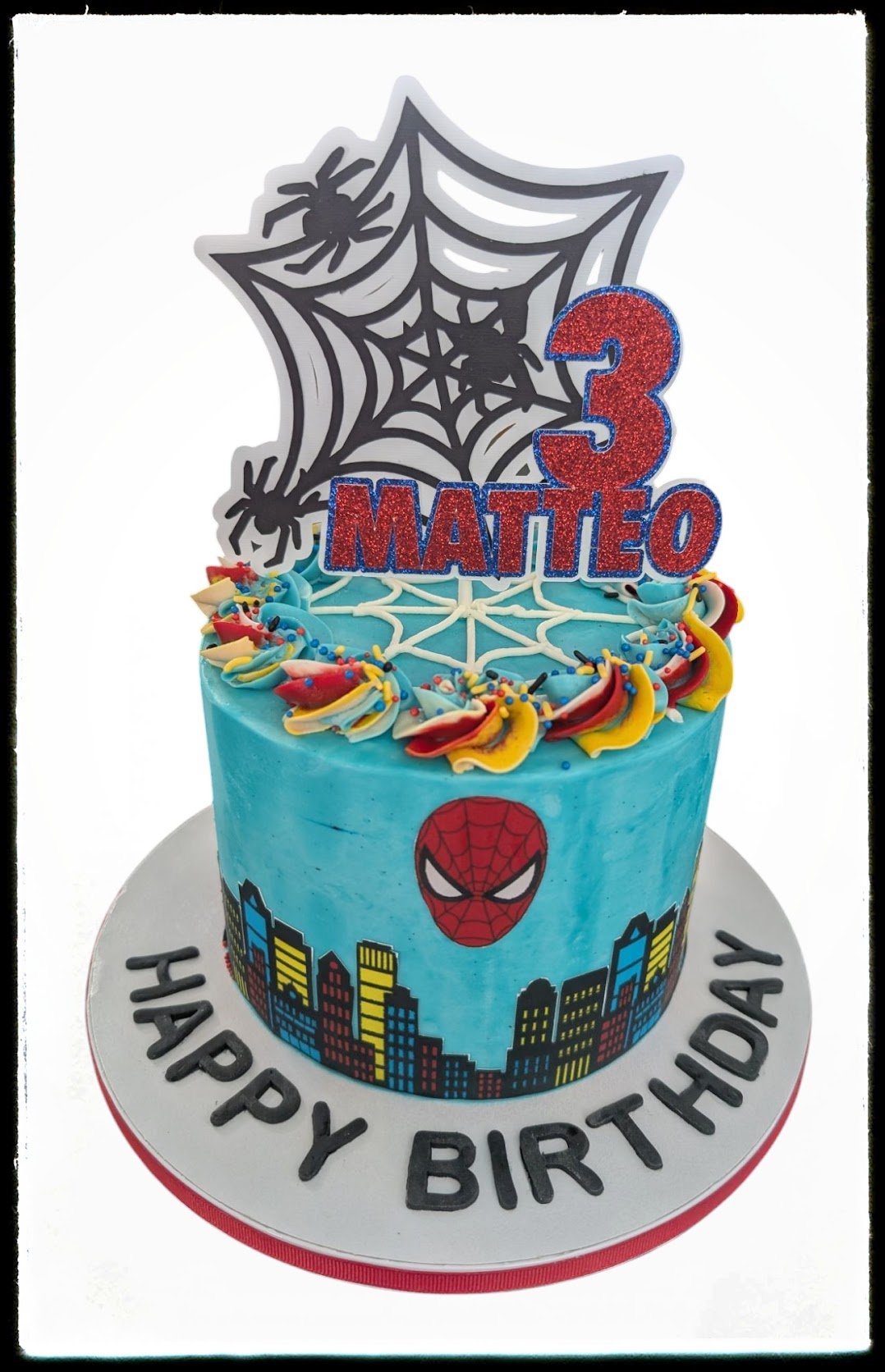
⚪ Use Contact Paper for an instant greaseproof and custom cake board
I have a supply of adhesive contact paper in white, black and fun patterns that I use to cover my homemade thicker cake drums.
Place a cake board on the contact paper and trace around it
Draw a second circle around the first that is 2” bigger
Cut out the circle
Cut slits every 2” around the outside edge, up to the edge of the inside circle
Remove the backing and have the sticky side up
Place the cake board in the middle of the paper and wrap the excess over the edges of the board
Another option is to cover scrapbook paper with clear contact paper and apply it in exactly the same way.
🌀 Fondant Fans this is for you!
Covering a cake board completely in fondant gives a different look and gives you the opportunity to use letter stamps to press the message on the board. When the fondant is dry you can color in the letters with edible markers. You can do this before or after decorating the cake.
Before: Try baking the fondant covered board so it dries rock hard. This results in a pretty marbled effect. The major con to this is that you have to have your cake completely decorated and very carefully place it on the fondant-covered board, or else you might end up with grease stains.
After: Use a cakeboard that is 2-3” larger than your cake. Place the cake in the center of the board and decorate the cake. Cut out a strip of fondant that is large enough to cover the extra space on the board and wrap it around the cake. This method does require a little more time and skill working with fondant as you are going from a straight piece of fondant and making it round.
🪄 Royal Icing Enthusiasts, we’ve got one for you!
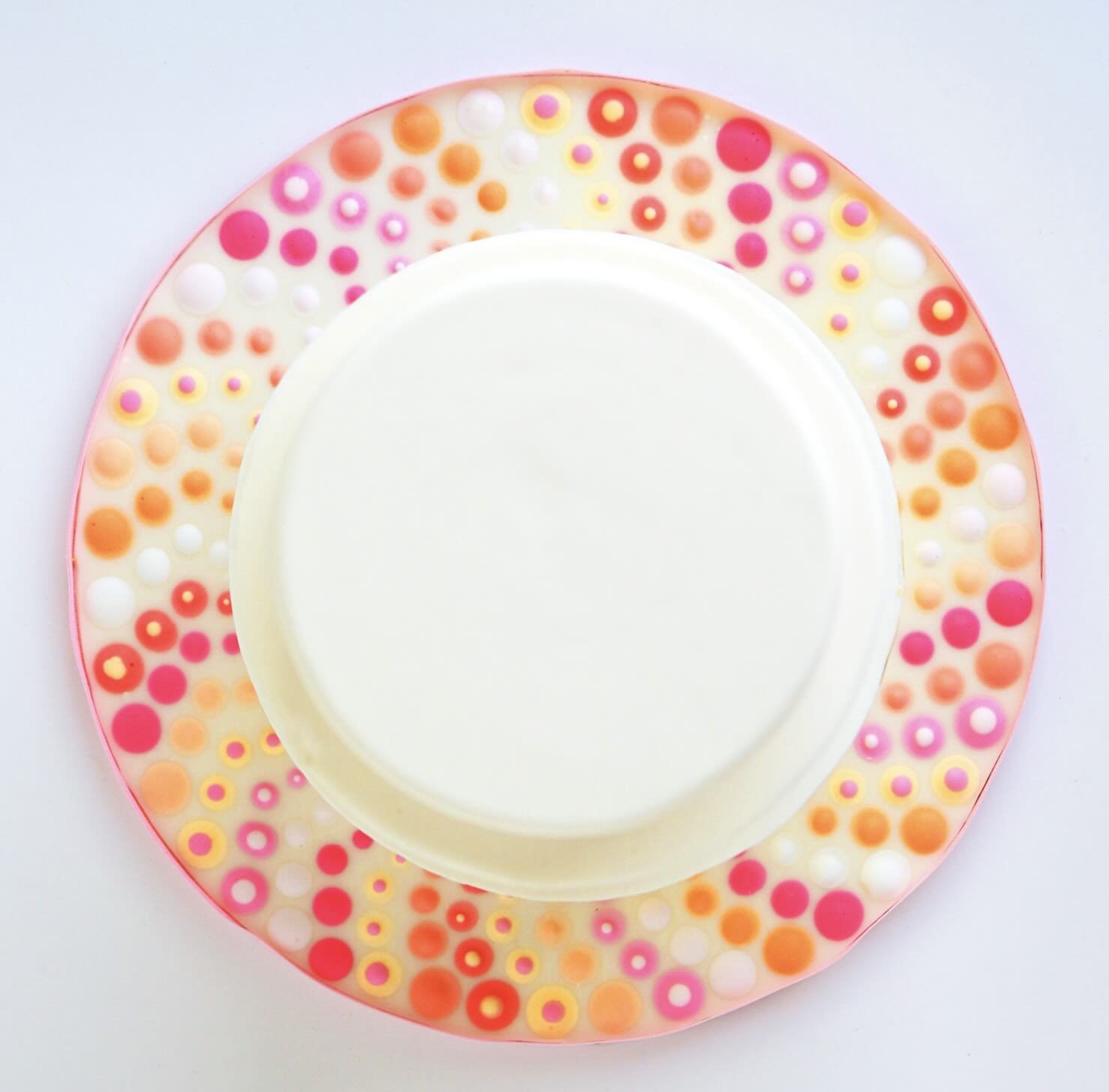
If you like working with royal icing, you can treat your cake board like a giant cookie and create designs with the wet on wet technique, attach sprinkles, sanding sugar or food safe glitter. Like the fondant covered board, you will need to be careful placing the cake on top to avoid grease stains.
🤎 Winter themed cakes become masterpieces with Gingerbread
Cover your cake board in gingerbread and bake for a festive holiday look.
PRO TIP: Add “feet” for easier lifting
Any time I am making a bigger, heavy cake, I always add feet to the bottom of my cake boards. It just makes it so much easier to lift the cake and also makes it slightly nonslip. I purchase self-adhesive, rubber, cabinet door stoppers. To attach them with the least amount of work, I place the stoppers sticky side up on my 12” turntable (which matches my 12” cake boards); I usually add 1-2 in the middle, depending on how heavy my cake is, and then 8 around the edge, about 1” from the side. This way they are invisible. I usually do this last, as the weight of the cake is enough to make sure the sticky door stoppers stay put!
Hopefully this will inspire you to find a simple technique or two to add your unique flair to your cake boards! Drop me a line at robin@cake4kids.org if you have any questions.
- Robin, aka The Cake Robin
The Ultimate Guide to Baking Cupcakes
While I love filling cake request for the youth, there’s something so quick and easy for me when it comes to a cupcake order. With these tips and tricks, making cupcakes can be a breeze for you as well.
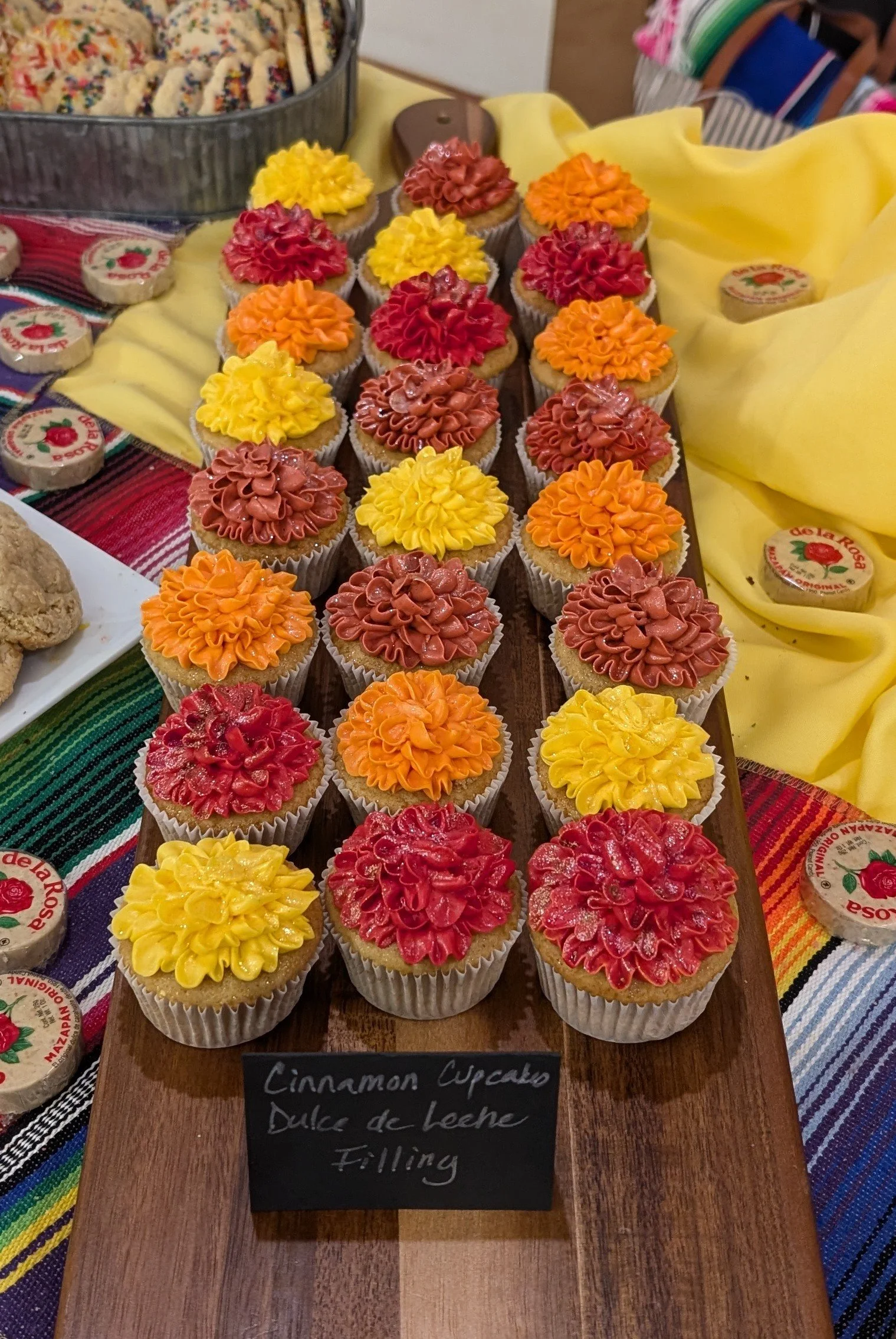
It’s important to know that not all cupcake recipes are equal! Knowing a few basics will help you navigate any pitfalls or overcome them if they happen. Cake recipes–butter vs oil based will bake differently. Oil based cupcakes turn out flatter than butter-based recipes.
And speaking of recipes, it’s always important to:
Read the recipe all the way through and follow the recipe exactly the first time
Practice mise en place/have all ingredients prepped before mixing–no ingredient gets left behind
Have all ingredients at room temp–Room temp is necessary for proper emulsion of ingredients–it’s science
Don’t over mix–this will lead to several other pitfalls discussed later
Use a scale–fewer measuring cups, spoons, etc. to wash. Too much flour or sugar leads to unpleasant cupcakes
Remember that overmixing? Use a hand mixer to mix cupcakes. Your batter does not have to be completely smooth
If you have extra batter (either from cupcakes or cake layers) you CAN freeze it! I thaw mine on the counter for an hour or two (depending on amount of batter) then bake. Have a little chocolate or strawberry batter left over? Safe it for that next “Baker’s Choice,” and use it to make marble cake.
For baking my cupcakes, the only liners I use are grease-proof or “glassine” liners. The cupcake releases beautifully, unlike the prettier paper liners. If I do use fancier liners, I will spray lightly with cooking spray to aid in the cake releasing. It also helps if the top of the cupcake pan is sprayed lightly so any batter that overflows releases easily.
To have perfectly baked cupcakes, we of course need cupcakes that are the same size. 99% of the time I use a disher/scoop - #20 (1.875 fl oz/3.5 Tbsp.) or #24 (1.5 fl oz/3 Tbsp.) for standard size cupcakes and #30/#36 for minis. These also work well for cookies too! For thinner batter (like chocolate or red velvet) use a measuring cup with a pour spout to help pour with less mess. Do you know what the number on a disher signifies? It’s the number of servings per quart or the number of ounces it holds–the smaller the number, the bigger the portion.
In general, if you are baking from a box recipe fill your wells about 1/2 full. For cupcakes from scratch, fill about 2/3 full. Once your wells are full, you can either use a spoon to smooth the tops (just like you’d smooth a cake) or tap gently on the counter–be careful, I have tipped a few liners to the side this way!
Now that we are finally ready to bake our perfectly mixed and filled cupcakes, we need to know our oven!
Let the oven warm up 15 minutes longer after “the beep” that it’s at temp
Bake in the center of the oven
If baking multiple trays, turn halfway through baking and switch racks. Gently move pans–the cupcakes are not set yet and you don’t want to deflate them!
Once you can see there is no more shiny batter in the center of each cupcake, wait for another minute and then test them
Is it done? Does the top spring back when touched lightly? Then they are done! Is there a slight indent? Give them another 2 minutes. (This is also how I test 99% of my cake layers.)
Let cool in pan for 5 minutes to set, then tip out onto wire rack to finish cooling. If the cupcakes sit in the pan too long, they will steam on the bottom. No one likes a soggy bottom
I feel like we all know this, but just in case, let them cool completely before decorating. Cupcakes cool quickly, but if you are in a hurry, pop them in the fridge briefly. I also like to pop my frosted cupcakes in the fridge for 15-20 minutes, so the buttercream solidifies, making them easier to transfer to a box. FYI–add sprinkles BEFORE you chill the buttercream, or else they roll right off!
Cupcakes do not need to be stored in the fridge. (Unless they are not for Cake4Kids, and you are adding a filling or using a whipped cream frosting.) Store in an airtight container for a few days.
Troubleshooting Common Cupcake Issues
Pointy or cracked tops? Either your oven is too hot, or the batter was over mixed
Shrinking or sinking after cooling? This could be several issues–Underbaked, overbeating, old baking powder, or too much egg (be sure to use the correct size for the recipe, you can also weigh your egg (1 whole egg = 50 grams)
Overflow? Too much baking powder/baking soda, overfilling, low oven temp, too much acidity (lemon cupcakes). If I have a little overflow, I will use a pair of kitchen shears to trim the side!
Cupcake peels away from liner? Underbaking cupcakes, fancy cupcake liners – if the liner is rigid, the cupcake will pull away as it cools
Cupcake sticky on top? It’s ok! Sugar reacts with the moisture in the air. This is not a flaw, just an inconvenience!
If you have any questions or other tips on working with cupcakes, please drop me a line at robin@cake4kids.org.
Buttercream Bliss
I often see requests in our Facebook Bakers Groups for help with buttercream recipes or tips and tricks for working with buttercream. We do have the Baker Resource Center, https://www.cake4kids.org/resource-center-welcome, which has recipes and decorating ideas. I’d like to share with you what I’ve learned since I made my first wedding cakes in 2006!
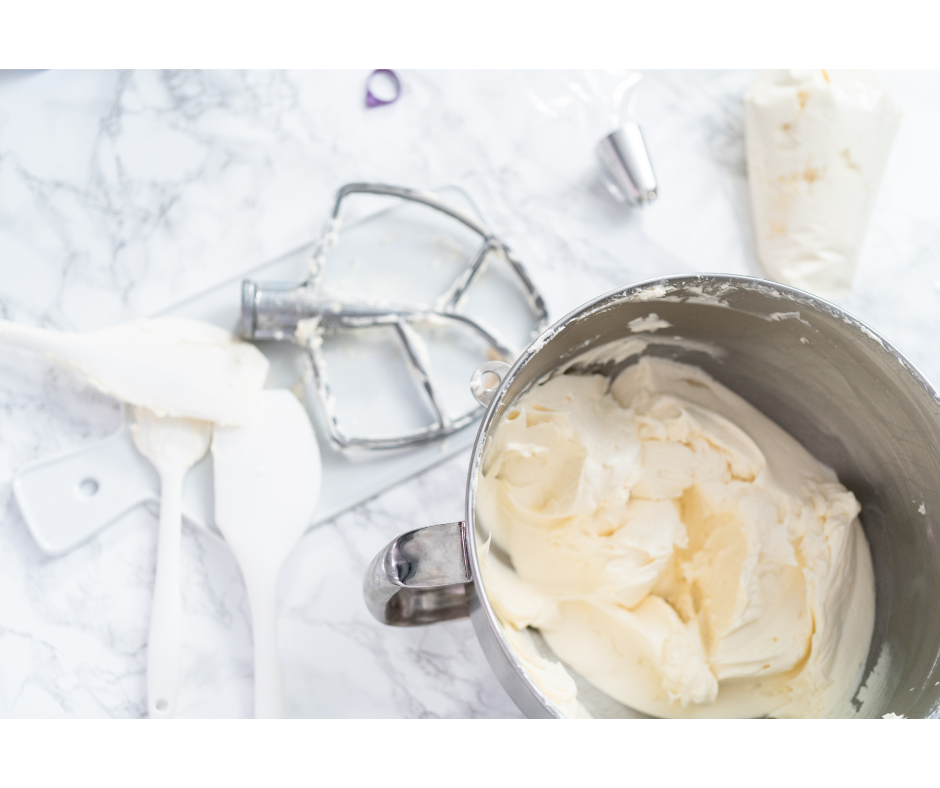
Here we go: Everything you always wanted to know about buttercream! These are my opinions and experiences and may be very different from what you have learned and do for your bakes.
Buttercream, Frosting or Icing? What am I using? Many bakers use these terms interchangeably, however there are differences:
· Buttercream is made, primarily, with butter, sugar, and liquid
· Frosting is a broader term and can be made with butter, but usually made with shortening or cream cheese
· Icing is a thinner mixture of powdered sugar and liquid, often used for drizzling over cakes or icing cookies, and usually does not contain any fat
There are many types of buttercream – for Cake4Kids, we will focus on American buttercream, Swiss meringue, Italian meringue and a hybrid buttercream.
American buttercream (ABC) is the absolute easiest to make– butter, powdered sugar, a pinch of salt, some flavoring and water to thin. This is a thick, dense and sweet buttercream. It is VERY important to whip the butter for a good 5-7 minutes (set a timer!) to get your butter fluffy and aerated before adding the SIFTED powdered sugar. This will also lighten the color of your buttercream. After this step, I will then switch my mixer to low and stir for another 5 minutes to get rid of any air bubbles and make sure the salt and powdered sugar has the best chance to dissolve.
NOTE: to avoid grainy American buttercream sift your powdered sugar, test different brands until you find one you like, and make sure that once all the butter is added (along with flavorings) you are whipping for another 5-7 minutes.
Swiss meringue buttercream (SMBC) is one of my top two buttercreams that I prefer to work with. It tastes delicious, it’s not overly sweet, and is a dream to smooth on a cake and decorate with. I only use carton/pasteurized egg whites for my Swiss meringue– this way I do not need to worry about the temperature of my egg/sugar mixture, only that the sugar has dissolved.
I’ve made Italian meringue buttercream (IBC) a few times, and I really didn’t see much of a difference in flavor or performance between it and Swiss meringue. It is a little bit more complicated to make, as you need to simultaneously watch a pot of boiling simple syrup and whipped egg whites. Then, add the boiling simple syrup into your whipped egg whites without getting it everywhere!
My other leading buttercream is what I call a hybrid buttercream– if you’ve only ever made American buttercream, I highly recommend you give this a try. You may have seen me post on Facebook about Easy Buttercream– it’s like ABC meets SMBC without having to cook anything. Pasteurized Egg Whites, Powdered Sugar, Butter, Salt and flavoring. It doesn’t get easier. Because of the added liquid in the egg whites, the powdered sugar dissolves, so you don’t have a grainy texture, and the flavor is VERY close to SMBC, and not as sweet as ABC.
Here are my tips for working with Buttercream:
Always use room temperature ingredients (except eggs for meringue-based– they can be cold or room temperature). What is room temperature? About 65 F. Too cold and the butter won’t fully mix, too warm and you may have an oily, flat mess that won’t whip up.
Use good butter– unsalted vs salted, it’s up to you. I prefer unsalted so I control the salt content. If you have salted, don’t add any salt until you’ve whipped the buttercream for the full amount, then taste and adjust if needed.
Regarding salt, I always add salt in the beginning for ABC or Hybrid, so it has the longest time to dissolve. (this goes for almost any baking recipe I make too!)
Whip long enough on high speed– at least 5 minutes for ABC, 10 minutes for SMBC and Hybrid. (once the butter is added)
Drape the mixing bowl with a clean dish towel to prevent powdered sugar or buttercream from flying everywhere. The pouring shield that comes with your mixer also works.
When in doubt, whip some more– and set a timer!
For super smooth buttercream, mix with the paddle on low for 5 minutes to remove air bubbles, or take a spatula and really stir/smear the buttercream around the bowl to eliminate bubbles.
Buttercream still yellow?
Whipping longer will help lighten the butter
Add a tiny toothpick tip of Violet (not Purple) gel color and whip for a few more minutes (too much makes your frosting an ugly gray, speaking from experience!)
Add white gel color (in addition to the Violet)
For super smooth buttercream and a smooth finish to your cake, consistency is key:
The higher the fat content of your butter, the softer, lighter and fluffier it will be.
First, have patience. Try whipping for a good 5 minutes, maybe longer depending on the temperature. Many times that will bring everything together.
ABC – add enough liquid, one tablespoon at a time to get a nice smooth consistency.
SMBC and Hybrid is governed mainly by temperature:
if your butter is too cold and not coming together, microwave a half cup for 5 - 10 seconds until starting to melt, then add back to mixer and mix. Repeat if necessary.
if the meringue or butter is too hot and you have a very loose buttercream, put the bowl and whisk in the fridge for 15 minutes and then continue mixing.
For high heat and humid climates, try using Italian meringue or use ABC with half butter and half vegetable shortening.
The best way to color buttercream is to use high quality gels (I love powdered color for darker colors like red and black) and give the colors time, even overnight, to develop.
Take a small amount of buttercream (1/4 cup), mix in color, and microwave until starting to melt. By melting some fat, the water base gel color will blend easier. Then mix this small amount into your larger amount of buttercream needed for the cake.
The latest technique is to blend your food coloring in with an immersion blender – honestly, I have not tried this one yet. If you do, let me know how it works!
Lastly, remember that if your buttercream is still very yellow, it will affect how your buttercream takes color, think yellow + blue = green!
Buttercream can be flavored with just about anything– cocoa powder makes THE best chocolate buttercream in the Hybrid buttercream recipe. Add in melted chocolate (up to 6 oz), peanut butter, Nutella, espresso powder, extracts, emulsions– there are so many options out there!
Buttercreams can be stored on the counter overnight, or in the fridge one week, and the freezer 3 months. Bring to room temp on the counter, then rewhip with the paddle attachment to restore texture. If the buttercream is still not smooth enough, microwave a few tablespoons until soft and add back in– this will help warm up the butter and get everything nice and smooth again.
For a dairy free alternative, I go the ABC direction with vegan butter sticks– I also like to add a vanilla butter emulsion (I use this in my cookie glaze too– so yummy!)
If you have any questions or other tips on working with buttercream, please drop me a line at robin@cake4kids.org. Look for videos of making and working with buttercream to be posted in the coming weeks as well!
Let’s Start With The Basics
I thought I’d create a list of my favorite tools or must-haves to create cakes for our youth. You may find yourself putting some of these on your own wish list! Looking for the right pans or decorating tools? Look no further!
Hello Bakers! We all find Cake4Kids for many different reasons. In my opinion, one of the best side effects of baking for the youth is increasing your baking and decorating skills! I came to Cake4Kids in 2011, never really having made decorated cakes or cookies, but I knew I was a good baker and made tasty treats. It’s so much fun to look at the progression of cakes I’ve made over the years, enough so that I have my own custom bakery now!
As the holidays are approaching, I thought I’d create a list of my favorite tools or must-haves to create cakes for our youth. You may find yourself putting some of these on your own wish list!

Cake Pans
Starting with the basics, to have your cake layers come out great, quality pans are essential. I recommend Fat Daddio’s or other heavy-duty aluminum pans. Skip the nonstick, and don’t put them in the dishwasher, please! Along with pans, parchment paper is a must. I always line my pans with parchment circles, use it on sheet pans, and cover my counter with parchment to keep it clean while decorating.
Decorating Tools
My first decorating essential is a heavy turntable. I started out with the white plastic Wilton turntable but was gifted a much heavier Ateco 12” cast iron turn table. I still use the lightweight turntables for teaching class, reminding myself of how much more stable, and therefore easier, it is to use the cast iron turntable, as it doesn’t slide around and turns smoothly. If your turntable doesn’t come with a nonslip mat or surface, cut yourself a square of shelf liner or purchase a silicone cake turntable mat to keep your cake board in place.
To smooth out buttercream, you need both large and small offset spatulas. Get in the habit of using the larger size for everything – it is easier (and faster!) and smooths better than the small size. I started out using only the small size, thinking I had more control, but once I switched, I’ve never gone back. I still use the small size for filling in smaller areas and painting with buttercream. Once you’ve got your buttercream on the cake, you’ll need a bench scraper or frosting scraper with sharp corners (90 degrees, no rounded edges) to smooth your crumb coat, and then each coat of buttercream thereafter.
To create some basic cake designs, you don’t need a ton of piping tips. I recommend the following, along with 12” piping bags:
· Round #3 – for writing
· Round #12 – piping borders, pearls, etc.
· Large tips #1M, 2D – piping swirls, borders, roses, etc.
· Large grass tip (Ateco) – piping grass, fur, borders, etc.
I have no loyalty to piping bags, lately, I find the Wilton brand is just too thick. I often buy Riccle from Amazon.
Packaging
Lastly, to make sure your cake arrives in perfect condition, I recommend using sturdy cake boards. I only use 12” round ½” thick cake drums, as they can take the weight of an 8” or 9” round, 4-5” tall take, filling and buttercream. The thinner, cardboard rounds can bend under the weight, which can make cold buttercream crack! And the 12” cake board gives you plenty of room for piping borders and, if necessary, putting the celebratory message on the cake board. Another fun decorating option with the cake drum is gluing a coordinating ribbon on the edge of the board for added color. Then of course you are going to pair your 12” cake board with a sturdy 12” cake box.
Do you have other favorite tools? Drop me a line at robin@cake4kids.org and I can update everyone in future newsletters and our Facebook Groups! Stay tuned for cupcake and cookie decorating lists, too, as well as recipe and decorating tips.
- Robin, aka The Cake Robin