
While I love filling cake request for the youth, there’s something so quick and easy for me when it comes to a cupcake order. With these tips and tricks, making cupcakes can be a breeze for you as well.
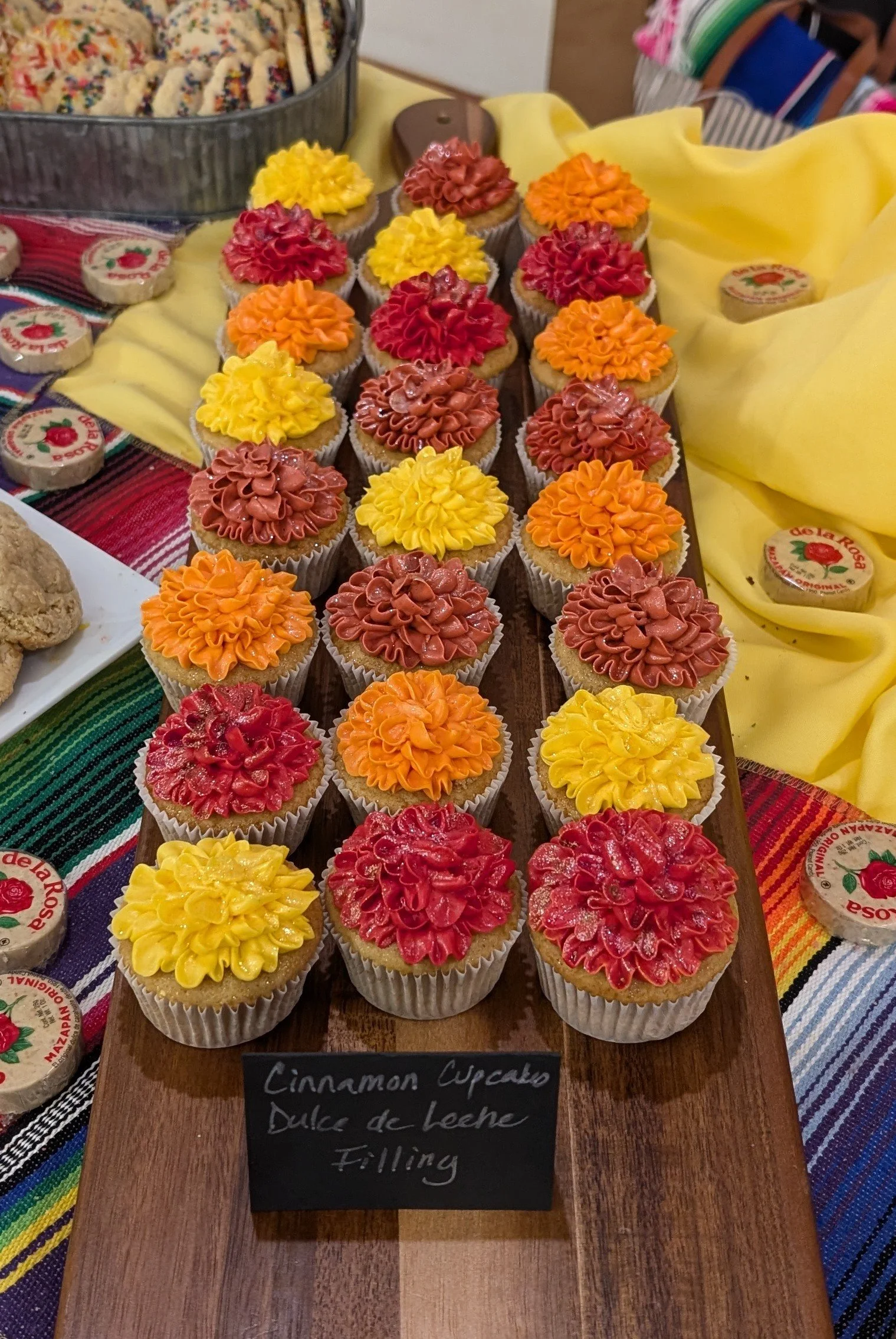
It’s important to know that not all cupcake recipes are equal! Knowing a few basics will help you navigate any pitfalls or overcome them if they happen. Cake recipes–butter vs oil based will bake differently. Oil based cupcakes turn out flatter than butter-based recipes.
And speaking of recipes, it’s always important to:
Read the recipe all the way through and follow the recipe exactly the first time
Practice mise en place/have all ingredients prepped before mixing–no ingredient gets left behind
Have all ingredients at room temp–Room temp is necessary for proper emulsion of ingredients–it’s science
Don’t over mix–this will lead to several other pitfalls discussed later
Use a scale–fewer measuring cups, spoons, etc. to wash. Too much flour or sugar leads to unpleasant cupcakes
Remember that overmixing? Use a hand mixer to mix cupcakes. Your batter does not have to be completely smooth
If you have extra batter (either from cupcakes or cake layers) you CAN freeze it! I thaw mine on the counter for an hour or two (depending on amount of batter) then bake. Have a little chocolate or strawberry batter left over? Safe it for that next “Baker’s Choice,” and use it to make marble cake.
For baking my cupcakes, the only liners I use are grease-proof or “glassine” liners. The cupcake releases beautifully, unlike the prettier paper liners. If I do use fancier liners, I will spray lightly with cooking spray to aid in the cake releasing. It also helps if the top of the cupcake pan is sprayed lightly so any batter that overflows releases easily.
To have perfectly baked cupcakes, we of course need cupcakes that are the same size. 99% of the time I use a disher/scoop - #20 (1.875 fl oz/3.5 Tbsp.) or #24 (1.5 fl oz/3 Tbsp.) for standard size cupcakes and #30/#36 for minis. These also work well for cookies too! For thinner batter (like chocolate or red velvet) use a measuring cup with a pour spout to help pour with less mess. Do you know what the number on a disher signifies? It’s the number of servings per quart or the number of ounces it holds–the smaller the number, the bigger the portion.
In general, if you are baking from a box recipe fill your wells about 1/2 full. For cupcakes from scratch, fill about 2/3 full. Once your wells are full, you can either use a spoon to smooth the tops (just like you’d smooth a cake) or tap gently on the counter–be careful, I have tipped a few liners to the side this way!
Now that we are finally ready to bake our perfectly mixed and filled cupcakes, we need to know our oven!
Let the oven warm up 15 minutes longer after “the beep” that it’s at temp
Bake in the center of the oven
If baking multiple trays, turn halfway through baking and switch racks. Gently move pans–the cupcakes are not set yet and you don’t want to deflate them!
Once you can see there is no more shiny batter in the center of each cupcake, wait for another minute and then test them
Is it done? Does the top spring back when touched lightly? Then they are done! Is there a slight indent? Give them another 2 minutes. (This is also how I test 99% of my cake layers.)
Let cool in pan for 5 minutes to set, then tip out onto wire rack to finish cooling. If the cupcakes sit in the pan too long, they will steam on the bottom. No one likes a soggy bottom
I feel like we all know this, but just in case, let them cool completely before decorating. Cupcakes cool quickly, but if you are in a hurry, pop them in the fridge briefly. I also like to pop my frosted cupcakes in the fridge for 15-20 minutes, so the buttercream solidifies, making them easier to transfer to a box. FYI–add sprinkles BEFORE you chill the buttercream, or else they roll right off!
Cupcakes do not need to be stored in the fridge. (Unless they are not for Cake4Kids, and you are adding a filling or using a whipped cream frosting.) Store in an airtight container for a few days.
Troubleshooting Common Cupcake Issues
Pointy or cracked tops? Either your oven is too hot, or the batter was over mixed
Shrinking or sinking after cooling? This could be several issues–Underbaked, overbeating, old baking powder, or too much egg (be sure to use the correct size for the recipe, you can also weigh your egg (1 whole egg = 50 grams)
Overflow? Too much baking powder/baking soda, overfilling, low oven temp, too much acidity (lemon cupcakes). If I have a little overflow, I will use a pair of kitchen shears to trim the side!
Cupcake peels away from liner? Underbaking cupcakes, fancy cupcake liners – if the liner is rigid, the cupcake will pull away as it cools
Cupcake sticky on top? It’s ok! Sugar reacts with the moisture in the air. This is not a flaw, just an inconvenience!
If you have any questions or other tips on working with cupcakes, please drop me a line at robin@cake4kids.org.